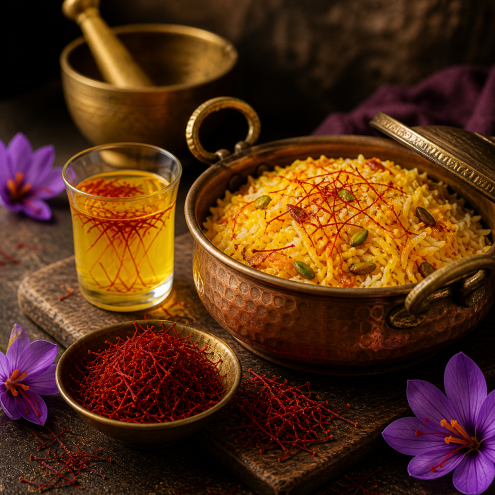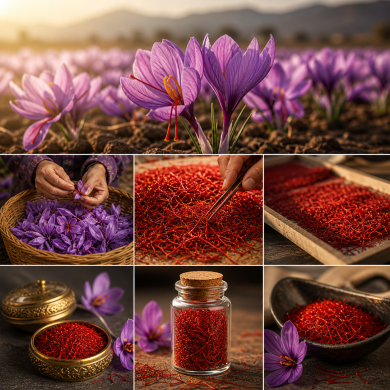
Saffron is not just a spice—it is an experience. Known as the gold of spices, saffron carries centuries of heritage, luxury, and unmatched sensory depth. But here’s the truth most people miss: using saffron correctly is what separates an ordinary dish from an extraordinary one.
If you’ve invested in premium saffron, you should be extracting every bit of its colour, aroma, and flavour. This guide will help you do exactly that.
Why Saffron Needs Special Treatment?
Unlike common spices, saffron is delicate and highly concentrated. Each strand holds powerful compounds:
- Crocin → gives the rich golden colour
- Safranal → responsible for its signature aroma
- Picrocrocin → delivers its subtle bitter taste
1. Never Use Saffron Directly (The Biggest Mistake)
Throwing saffron directly into food wastes its potential.
What to do instead: Bloom it
- Take 5–10 strands
- Soak in warm water, milk, or broth
- Let it rest for 10–20 minutes
This process releases:
✔ Deep colour
✔ Full aroma
✔ Even flavour distribution
👉 Think of it as activating saffron before cooking.
2. Heat Control is Everything
Saffron is sensitive to high heat.
- Avoid frying saffron directly in oil
- Add saffron infusion towards the end of cooking
- Gentle heat = better flavour extraction
Golden Rule:
High heat destroys aroma, low heat enhances it.
3. Use Less, Not More
With saffron, more is not better.
- Too much saffron = overpowering bitterness
- Correct amount = balanced luxury
Ideal Quantity:
- 2–3 strands → light infusion
- 5–10 strands → rich flavour
- 10+ strands → strong & intense
👉 Premium saffron means you need very little.
4. Pair Saffron with the Right Ingredients
Saffron shines when paired thoughtfully.
Best Pairings:
- Milk & dairy → enhances richness
- Rice → absorbs colour beautifully
- Nuts (almond, pistachio) → complements depth
- Honey & sugar → balances bitterness
Avoid:
- Overly spicy combinations
- Strong competing flavours
👉 Saffron should lead the dish, not fight for attention.
5. Timing Matters in Cooking
When you add saffron changes everything.
| Dish Type | When to Add |
|---|---|
| Rice (Biryani, Pulao) | During final layering |
| Desserts | During simmering stage |
| Milk-based drinks | After heating |
| Sauces | Near finishing stage |
👉 Late addition preserves aroma and colour.
6. Grind for Maximum Intensity (Advanced Technique)
For a stronger effect:
- Lightly crush saffron strands using a mortar & pestle
- Then soak the powder
This increases:
✔ Colour release
✔ Aroma strength
✔ Faster infusion
7. Storage Affects Flavour
Even premium saffron loses quality if stored poorly.
Store saffron:
- In an airtight container
- Away from light & heat
- In a cool, dry place
👉 Exposure = loss of aroma.
8. Water Test in Cooking
When you bloom saffron:
- Colour should release slowly
- Liquid turns golden, not instantly red
- Threads retain structure
👉 This confirms purity and ensures authentic flavour.
Signature Uses of Saffron
To truly experience saffron, try it in:
- Royal Biryani
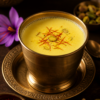
- Saffron Milk (Kesar Doodh)
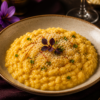
- Risotto alla Milanese
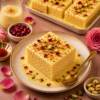
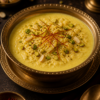
- Phirni & Kulfi
- Honey Glazed Dishes
Each dish highlights a different dimension of saffron.
Final Thought: Saffron is an Art, Not an Ingredient
Cooking with saffron is about patience, precision, and respect for the ingredient.
When used correctly, saffron doesn’t just add flavour—it:
- Elevates presentation
- Enhances aroma
- Creates a memorable experience
At Saffron Merchant, we believe saffron should be experienced in its purest, most refined form.
Pro Tip from Saffron Merchant
Always bloom saffron first.
It’s the difference between using saffron… and truly experiencing it.

Add comment