Understanding the craftsmanship behind the world’s most precious spice
Introduction
Saffron is not just a spice—it is a symbol of rarity, craftsmanship, and centuries-old tradition. Known as “red gold,” saffron’s value comes not only from its distinctive aroma, colour, and flavour, but from the extraordinary journey it undertakes before reaching your kitchen.
At Saffron Merchant, we believe that understanding this journey deepens your appreciation for every strand. From delicate purple blooms to hand-separated crimson threads, saffron is a product of patience, precision, and passion.
The Origin: A Flower Unlike Any Other
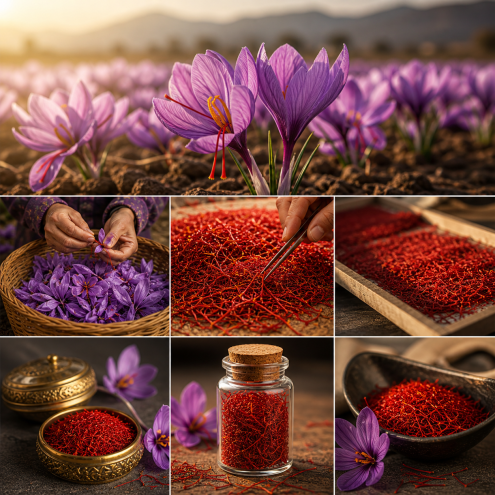
Saffron comes from the flower Crocus sativus, a delicate bloom that appears for only a few weeks each year. Each flower produces just three vivid red stigmas—the threads we know as saffron.
These flowers thrive in specific climates with:
- Dry summers
- Cold winters
- Well-drained soil
Regions like Iran, Kashmir, and parts of Europe are known for producing some of the world’s finest saffron due to these ideal conditions.
The Harvest: Precision at Dawn
The harvesting process is where saffron begins to reveal its true value.
- Flowers are handpicked at sunrise, before they fully open
- This preserves the potency and prevents damage from sunlight
- Harvesting must be done quickly within a very short blooming window
There is no machinery involved—only skilled hands and years of experience.
To put it into perspective:
👉 It takes over 150,000 flowers to produce just 1 kilogram of saffron
That’s why saffron is one of the most labour-intensive agricultural products in the world.
Separation: The Art of Extraction
Once harvested, the flowers are carefully taken apart to extract the delicate red stigmas.
This step requires:
- Extreme precision
- Gentle handling
- Skilled craftsmanship
Each stigma must be separated without damage, as even slight mishandling can affect quality.
At this stage, saffron begins to reveal its defining characteristics:
- Deep crimson colour
- Subtle floral aroma
- Natural elasticity
Drying: Preserving Purity and Potency
Fresh saffron threads are then dried to lock in their flavour, aroma, and colour.
This process is critical:
- Under-drying reduces shelf life
- Over-drying damages aroma and strength
Traditional drying methods ensure that saffron retains:
- Its rich golden colouring ability
- Its distinctive fragrance
- Its full-bodied flavour profile
Properly dried saffron becomes lightweight yet highly potent—just a few strands can transform an entire dish.
Grading: Defining True Quality
Not all saffron is equal. The quality depends on several factors:
- Colour strength (crocin levels)
- Aroma (safranal content)
- Flavour (picrocrocin presence)
- Thread integrity (unbroken, deep red strands)
Premium saffron—like what we offer at Saffron Merchant—features:
- Long, thick, deep red threads
- Minimal yellow or orange parts
- Strong aroma and colouring power
This is what separates authentic saffron from diluted or low-grade alternatives.
From Source to You: The Saffron Merchant Promise
At Saffron Merchant, we focus on delivering saffron that reflects its true heritage and quality.
Our sourcing process ensures:
- Carefully selected origins
- Strict quality checks
- Preservation of natural purity
- No additives, no compromise
Because when it comes to saffron, even the smallest detail matters.
Why This Journey Matters
Understanding saffron’s journey changes how you use it.
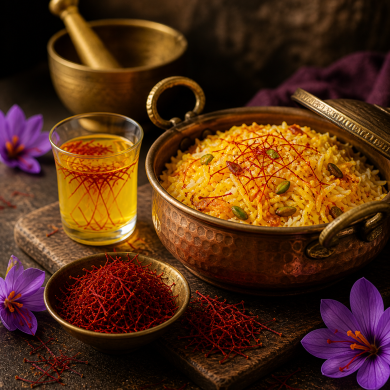
You don’t just add saffron—you experience it:
- A few strands infused in warm milk
- A subtle golden hue in rice
- A delicate aroma in desserts
Every use becomes intentional, refined, and meaningful.
Conclusion
Saffron’s journey—from a fragile flower to a treasured spice—is a testament to human craftsmanship and nature’s precision.
It is not mass-produced.
It is not rushed.
It is carefully created, step by step.
And that is exactly why saffron remains one of the most luxurious ingredients in the world.

Add comment